Showing posts with label agriculture. Show all posts

Sunday, October 7, 2012

Visit to The Pfeiffer Center


For years now I’ve wanted to visit The Pfeiffer Center, a biodynamic farm in Chestnut Ridge, NY, not far from here.  I finally had my chance last Sunday, during the Rockland Farm Alliance “Farm to You” Festival and Tour.    It was just one of the places visited that day, along with Cropsey Community Farm in New City, Bluefield Farm in Blauvelt and Hook Mountain Growers in Upper Nyack.

Apart from their attention to the lunar calendar, I wasn’t too familiar with biodynamic growing.  Biodynamic ideas originated with Rudolf Steiner in the 1920's, when he realized that conventional fertilizers weren’t maintaining soil quality.  Biodynamics takes organic farming a step further.  

From the Pfeiffer Center website:
“Steiner described an approach to plant and land care that combined novel techniques of building up healthy soil with a renewed awareness of all the forces at work in the farm organism: among and between the soil, plants, animals, and humans, as well as the cosmos itself.  Rudolf Steiner set forth the principles of a modern, organic agriculture that works with life-regulating processes and subtle catalysts such as trace elements and enzymes. He emphasized that each farm is an organism in its own right, with an organism's powers of self-healing.”

On Sunday, I was able to watch and take part in a biodynamic practice that has the potential to affect growth on their farm for years to come.  We made a composted manure “tea” solution, known as “Preparation 500” that will be sprayed on the crops and gardens.  The diluted preparation introduces beneficial microbes that both feed and protect the plants, stimulate growth and fecundity, and enrich the soil. 

We started with a pail full of hollow cowhorns.  We used spoons to fill them with fresh cow manure.  The cow horns are usually planted in the soil during the fall, around the time of the equinox, when the earth starts to withdraw into itself.   In the spring, they’re recovered, and the composted manure is used to make the solution. 

For this workshop, the staff had some already-composted manure ready to go, and the participants all had a part in stirring the compost into the water using paddles as well as bare hands. 


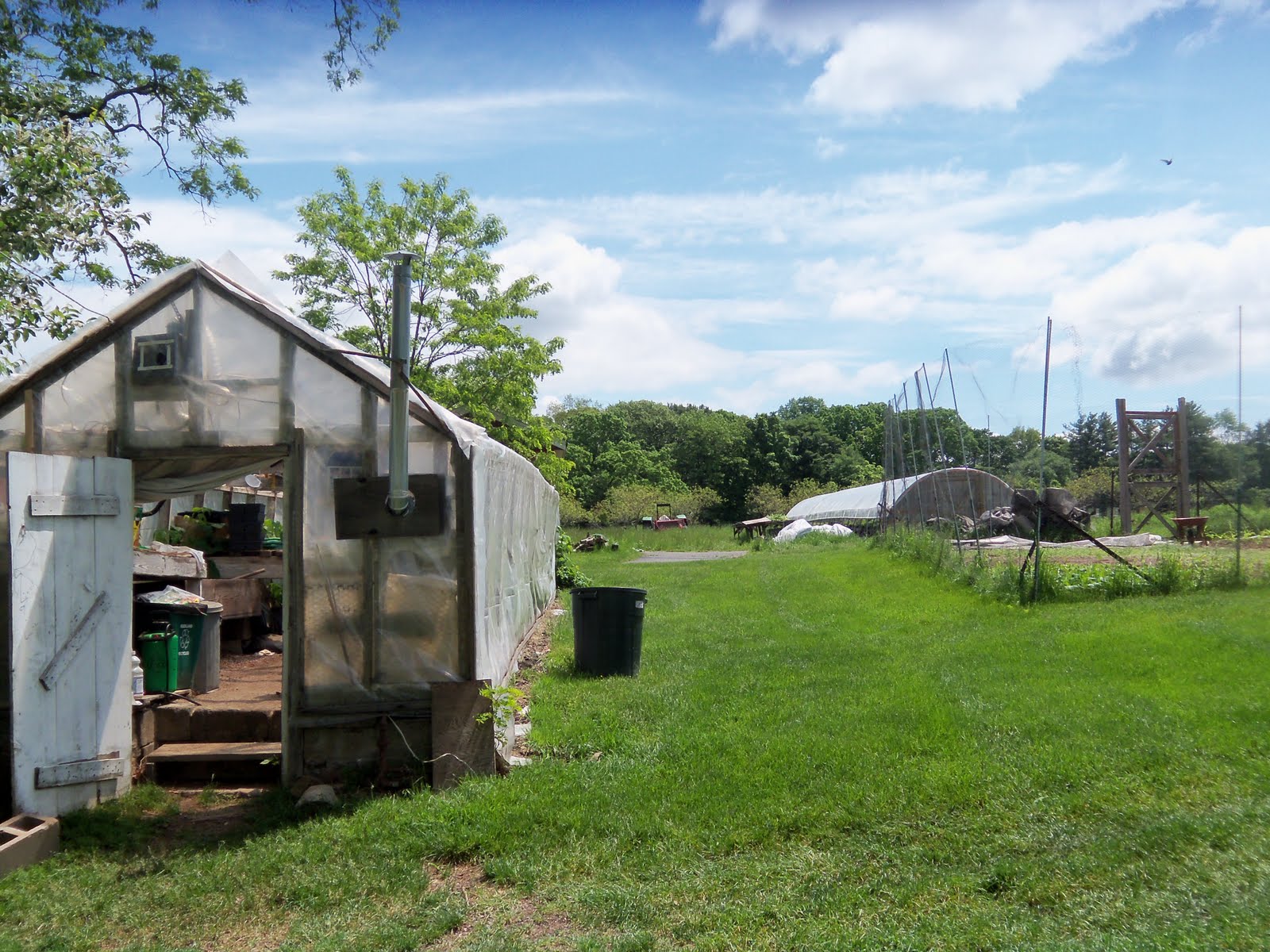
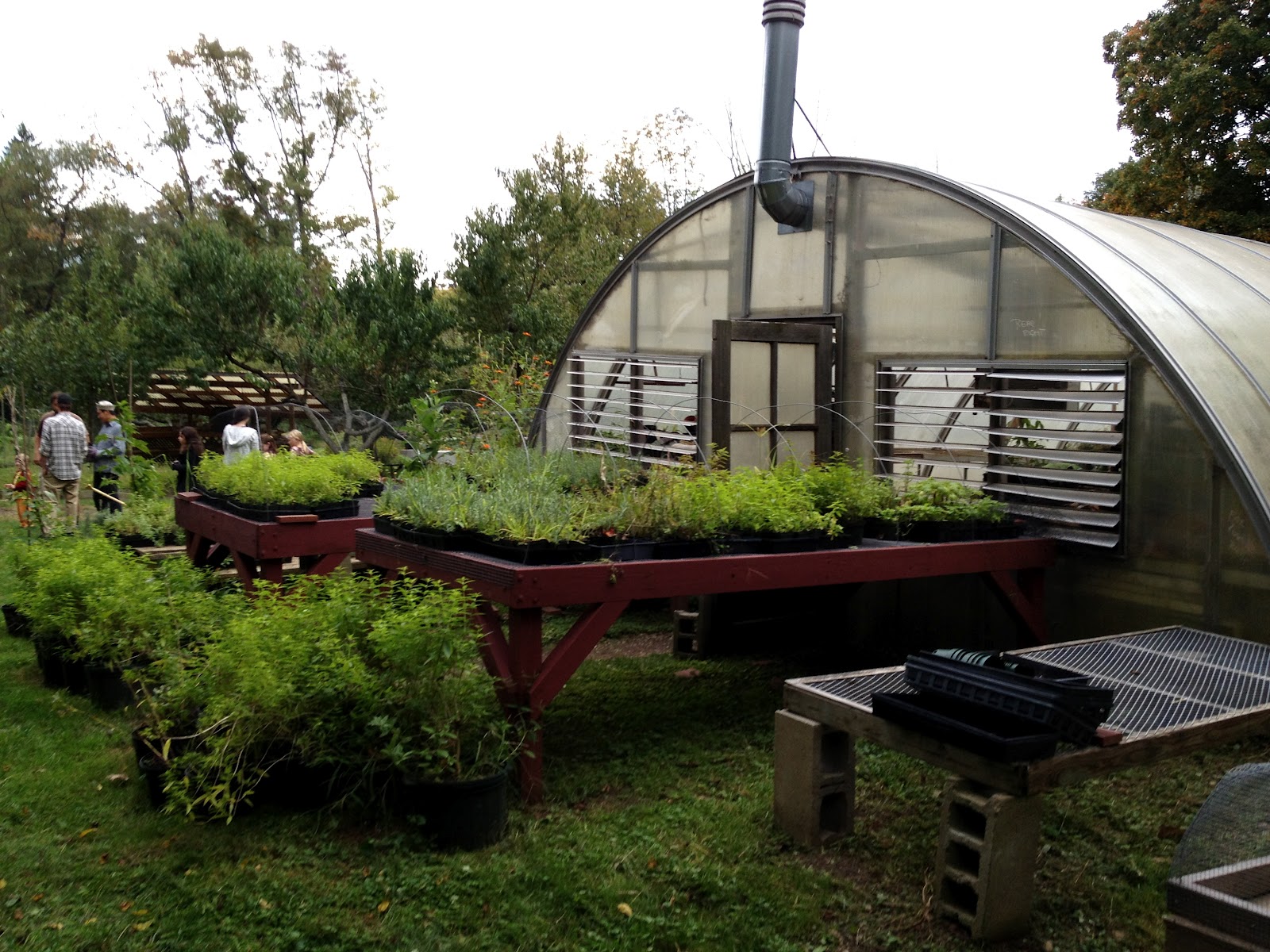
I also got a peek at their beautiful vegetable garden.   The site pictured here is only part of their farm.  They have a total of 70 beds, two horses, an orchard and berries, a greenhouse, compost piles, wood-fired oven, an apiary, and dye garden for a fiber craft studio.  They also have a seasonal farm stand that is self supporting and open on Monday and Thursday mornings. 


The Pfeiffer Center runs regular workshops that are open to the public. So much to learn here -  hope this visit was the first of many!

Saturday, October 15, 2011

Growing, Blooming, Picking, Baking


It's Garden Blogger's Bloom Day, hosted by Carol at May Dreams Gardens.  Lots going on here in zone 6A this time of year -- so much that it's hard to give anything the attention it deserves.  There are still vegetables to be harvested, and flowers to scope out, apples to pick and ... we're finally in the mood to bake!  Forgive me, but I'm combining 4 posts in one today.

First the Growing:

Peas - "Sugar Ann" is a variety of snap pea that has a very short time to harvest - only 50 days.  These were planted around mid-August.  Although they're not supposed to need trellising, I think it could have helped.  It was nice to have some fall peas, since I neglected to plant them in the spring.


It took a while to get going, but the radicchio was finally harvested. I cut it in half, brushed it with bacon grease, grilled it and topped it with balsamic vinegar.  So good!

The Butternut Squash that grew in the backyard didn't grow to a very impressive size, but it was delicious,
filled with beets and topped with brown sugar and butter, then roasted.


Most of the lettuce seeds I sowed in August were washed away by hurricane Irene- I got one nice harvest though.


Blooming
Front door - I've got Autumn Joy and red geraniums in pots,  some volunteer nasturtium growing between the steps.  The container has Cuban oregano, creeping thyme, oxalis, lavendar, and I've forgotten the name of the plant with the purple veined leaves (please remind me if you know!)


Pentas and petunias still going strong in an old BBQ grill that I converted to a planter.  Zinnas still standing strong.

Here are the 3rd generation French Marigolds -- I'll be collecting these seeds again for sure.  Nothing looks better this time of year.


Apple Picking
We've had lots of stunningly gorgeous sunny fall days, aso we took advantage of it and made two apple picking trips this year, to our local spots,  Dr. Davies Farm with our friends Kelly, Aiden and Robby, and to Orchards of Concklin with our cousins. 


Baking
The kids peeled the apples, and my sister-in-law Janine put together an awesome apple crisp.  Thanks to Cindy F. from our Working Moms group for the recipe.

Apple Crisp
6 cups peeled sliced cooking apples
1 cup rolled oats
1 cup brown sugar
1/2 cup flour
1 tsp cinnamon
1/4 tsp nutmeg
1/2 cup butter

Put apples in square baking dish. Combine the next 5 ingredients in a bowl.
Cut in the butter until the mixture looks like coarse crumbs. Sprinkle over
the apples. Bake at 375 F for 30 minutes or until apples are your favorite
consistency. Serve warm with caramel sauce and vanilla bean ice cream.


Hey, I saved a whole bunch of "Minnesota Midget" heirloom cantaloupe seeds - they were lots of fun to grow.  If you'd like some, just send your address to me at nyackbackyard@gmail.com.  While supplies last, of course.


Monday, July 11, 2011

Bees, Bayer, and the Big Pharma Fakeout

Colony Collapse Disorder (CCD) wiped out an estimated one-third of the U.S. honeybee population, and scientists are scrambling to find out why.  A good percentage, however, seem to be able to resist the lure of Bayer, the multi-billion dollar pharmaceutical company that is funding their research on viruses and fungus, but not on neonicotinoids, a class of pesticides manufactured by Bayer that many suspect is confusing bees and making them more susceptible to disease.  Here's an article that explains it all in detail, and how this important info was omitted from a front-page New York Times piece that ran last year about the breakthrough research that got everyone all excited. 

Then, in January, we learned that the U.S. Environmental Protection agency knew all along that this chemical was toxic to bees, but is allowing it to be produced and distributed anyway.  How's that for "protection"?   Their advice to growers?  "Read the labels."
Somehow, the idea of putting the planet’s growing systems at risk, so that Bayer can continue to do business irresponsibly is especially disturbing.  It’s not like the earth can choose to take a drug only after reading the studies and weighing the various risks and side effects.  We are currently experiencing a side effect that could have serious consequences on our farms and in our forests. It would be nice to see this conflict of interest exposed further in the mainstream media, and the use of this pesticide curtailed, as it has been in several European countries, until more facts are known.

There's a "buzz" about this film!
I'm looking forward to learning more on Sunday, July 17 at 2:00 pm, when "Queen of the Sun" will be shown at Fellowship of Reconciliation, 521 North Broadway, Nyack, NY. 

(This post has been re-written and re-posted.  It was originally written in Oct. 2010, but disappeared from my blog. )

Monday, June 20, 2011

Help for Our Little Apple Tree

Back in 2007, we decided to plant an apple tree in our school courtyard.  It wasn't easy to get this idea approved.  There were lots of valid concerns.  Apples can be hard to grow organically, even for professionals (which we're not!)   With a little research though, I discovered that just about any pest or disease that affects an apple tree can be treated organically. 

There were also concerns that the abundance of fruit (we should be so lucky) rotting on the ground would attract rodents, and that the flowers would attract bees.  This may seem like a huge benefit considering the current crisis affecting honeybee populations, but for the school, and for the few children allergic to bee stings, it's a liability.

Since we have limited space, we ordered a "Three-in-one" grafted tree from a mail order nursery.  Since apple trees need to be planted near other apple trees in order to pollinate, grafting three trees together would allow three different varieties to pollinate each other within the same tree.  That's how we got away with only planting one. 

It took four years, but the tree finally developed fruit this year.   We were so excited!

However, now the apples have little worm (?) holes all over them. 


A sticky substance is coming out of the holes and rust-like fungus(?) is plaguing the leaves on one of the branches.  Most of the apples are falling off. 

I can't say that this tree has received too much attention in recent years -- it's definitely under-watered.  We've taken a wait-and-see approach, even with preventative treatments, because we want to be sure of what we're dealing with before we apply anything.

But now it's time to do something if we want to save it.  Some visiting experts from our local extension recommended that we submit an infected branch to their lab.  So that's the plan!  But I would also love suggestions from anyone who might have experience treating these kind of apple tree symptoms - preferably organically.  

Have you ever grown apples?

Saturday, June 11, 2011

Cropsey Community Farm


Valley Cottage School is so grateful to Cropsey Community Farm.  When they found themselves with some extra seedlings a few weeks ago during their planting season, they donated them to our school garden!  What perfect timing, too  -- our classes were in the middle of their spring planting activities.   

When I went to pick them up, their Community Coordinator, Tamika Adjemian, was able to take a break from the digging to give me tour of the property.


The land was originally owned by Jim and Pat Cropsey, whose family farmed the land for over 100 years. 


When they retired, they sold it to Rockland County and the Town of Clarkstown through their open space programs.  The town signed an agreement with Rockland Farm Alliance for a no-cost lease of 5 acres to be used for community farming and agricultural education.


Through the efforts of the Alliance and many dedicated volunteers, the farm is now up and running!


This year, they started a CSA, and only had a few shares left to sell at the time of my visit. (CSA stands for Community Supported Agriculture, a way of bringing fresh local produce to residents through sales of “shares,” usually consisting of weekly boxes of produce.)


Renovations of the big red barn are underway.

The Farm Alliance hopes to someday have a community farm in every town in Rockland County. 

Thanks again, to Jessica Kesselman, Tamika Adjemian and everyone at the Farm Alliance and Cropsey Farm, for your committment to our community, healthy food, sustainability and the future of agriculture.  You'll probably be seeing your seedlings in action in upcoming posts about the “Seed to Salad” and “Three Sisters” plots in the school garden.  


230 South Little Tor Rd.
New City, NY 10956
845-634-3167

Tuesday, April 5, 2011

A More Humane Egg


Evidence suggests that cage-free chickens have a lower risk of salmonella infection, and thankfully, the number of restaurants and retailers switching to cage-free eggs is growing.  Walmart, Costco, Safeway, Trader Joes’ and Whole Foods are all shifting to cage-free eggs. So are Royal Carribbean and Carnival Cruise Lines, Ben & Jerry’s, Burger King, Denny’s, Subway and Wendy’s, as well as dining halls at numerous colleges and universities.   Battery cages will be outlawed in California by 2015. 


It’s confusing, though, to sort through the claims on the cartons at the grocery store.  Here’s a rundown of some and what they mean.

USDA ORGANIC – hens cannot be caged and must have outdoor access, and be fed an allvegetarian diet free of antibiotics and pesticides, however beak cutting is permitted.

AMERICAN HUMANE CERTIFIED – hens can be confined in cages or cage-free. Beak cutting is allowed.

ANIMAL WELFARE APPROVED – must be from flocks of no more than 500, and spend their adult lives outside.  No beak cutting.

CERTIFIED HUMANE – hens cannot be caged, but may still be kept inside.  Beak cutting allowed.

UNITED EGG PRODUCERS CERTIFIED – meets minimum industry standards which routinely permit cruel and inhumane practices.

RAISED WITHOUT ANTIBIOTICS – Routine use of antibiotics is illegal, but they are often used on sick birds.  If given antibiotics at anytime, this claim cannot be used.

CAGE FREE – usually means hens are raised in barns or warehouses.  They may not have access to the outdoors, but usually have 2-3 times more space than caged hens.

FREE RANGE – hens have some outdoor access, but there is no way to know how much or what kind. 

PASTURED OR PASTURE RAISED – hens must have some foraging time outdoors. 

Of course, the easiest way to avoid having to determine whether you’re purchasing eggs from inhumane farms is to raise your own chickens.   Many people, even those in urban neighborhoods, are keeping chickens in backyard coops.  BackyardChickens.com is a great place to start for info on how to take the plunge.

To Learn More:

Nutrition Action, “Walking on Eggshells” by David Schardt, November 2010; Center for Science in the Public Interest, http://www.cspinet.org/nah/

Monday, January 10, 2011

Catalogs to Curl Up With: Richter's Herbs


This is the glorious time of year when the plant porn arrives, and gardeners start thinking about what will be planted in the coming months when the ground begins to thaw.    Every catalog offers something special, but I do have some favorites.  My budget only allows me to place a couple of orders, but I can dream. 

When it comes to growing edibles, I admit that I’m attracted to the exotic.  Did you know that there are 7,000 species of food plants, but only 140 are cultivated commercially and most of the world’s food supply depend on just 12?    Anybody can find a spearmint or peppermint plant at their local Home Depot, but Richter’s has 38 varieties of mint.  They're also starting a Seed Zoo, hiring explorers to act as seed “curators,” travelling around the world to obtain landraces – plants with unique features found in only one region or sometimes in just one village.   They'll make these seeds available in limited quantities online.

My heart gives a little jump when the Richter's catalog arrives, because I know that I'll see something new.  Maybe I can’t grow them all here in zone 6A, but they’re fun to read about anyway.   Here are some highlights from this year’s catalog.  If you’ve had experience with any of them, I’d love to hear about it.

Andrographis – the main herb used to fight the common cold in Scandanavia “better than echinacea.”   Annual.

Bacopa – I grew the ornamental bacopa last year.  This variety, monniera, is medicinal, treating hysteria and insanity.  May be good to have on hand.

Sweet Salad Basil – leading variety for commercial dried spices, with a cinnamon-clove note.


Yellow bedstraw

Bedstraw Yellow – curdles milk!  Also known as cheese rennet.  Tops and roots are source of yellow and red dyes.

Rose Scented Bergamot (monarda)– a perrenial in my zone.  Source for tea and potpourri.  Pretty pink flowers.

Jewelweed
Jewelweed – the antidote to poison ivy.  Must have.

Arp Rosemary – the hardiest variety of rosemary.  Reliable to zone 7 and can live in 6 with protection.

Chia – seeds are considered a “superfood” full of nutrients.

Bayberry – Aromatic shrub.  May go for the plant since it sounds like seeds are hard to germinate.


Edelweiss

Edelweiss – Sentimental.  I sang this song to the E. girl when she was tiny, tiny. Sounds like it’s easy to grow, and medicinal.

Yellow Foxglove – One of my favorite flowers and does well in shade.  Yellow would be so pretty.

Wild Ginger – a.k.a Indian Ginger.  Perennial in my zone.

Golden Hops – I’ve been told these annual vines will grow fast and would like to try them on my deck arbor.

Hops


Piss- Off  Plant – they recommend planting this where you don’t want dogs or cats to pee or dig.   Only perennial in zone 11+

Orange Spice Thyme – with 24 varieties of thyme it’s hard to choose, but this is a Richter’s “exclusive.”

Right now I’m just browsing – I probably won’t place any orders until next month.  But until then, I’m curious…What are you excited about planting this year?


Friday, October 15, 2010

Bees, Bayer and the Big Pharma Fakeout

Colony Collapse Disorder (CCD) wiped out an estimated one-third of the U.S. honeybee population, and scientists are scrambling to find out why.  A good percentage, however, seem to be able to resist the lure of Bayer, the multi-billion dollar pharmaceutical company that is funding their research on viruses and fungus, but not on neonicotinoids, a class of pesticides manufactured by Bayer that many suspect is confusing bees and making them more susceptible to disease.  Here's an article that explains it all in detail, and how this important info was omitted from a front-page New York Times piece that ran last year about the breakthrough research that got everyone all excited. 

Then, in January, we learned that the U.S. Environmental Protection agency knew all along that this chemical was toxic to bees, but is allowing it to be produced and distributed anyway.  How's that for "protection"?   Their advice to growers?  "Read the labels." 
Somehow, the idea of putting the planet’s growing systems at risk, so that Bayer can continue to do business irresponsibly is especially disturbing.  It’s not like the earth can choose to take a drug only after reading the studies and weighing the various risks and side effects.  We are currently experiencing a side effect that could have serious consequences on our farms and in our forests. It would be nice to see this conflict of interest exposed further in the mainstream media, and the use of this pesticide curtailed, as it has been in several European countries, until more facts are known.

There's a "buzz" about this film!
 I'm looking forward to learning more on Sunday, July 17 at 2:00 pm, when "Queen of the Sun" will be shown at Fellowship of Reconciliation, 521 North Broadway, Nyack, NY. 

(This post has been re-written and re-posted.  It was originally written in Oct. 2010, but disappeared from my blog. )

Wednesday, September 22, 2010

Three Sisters School Harvest and Tasting


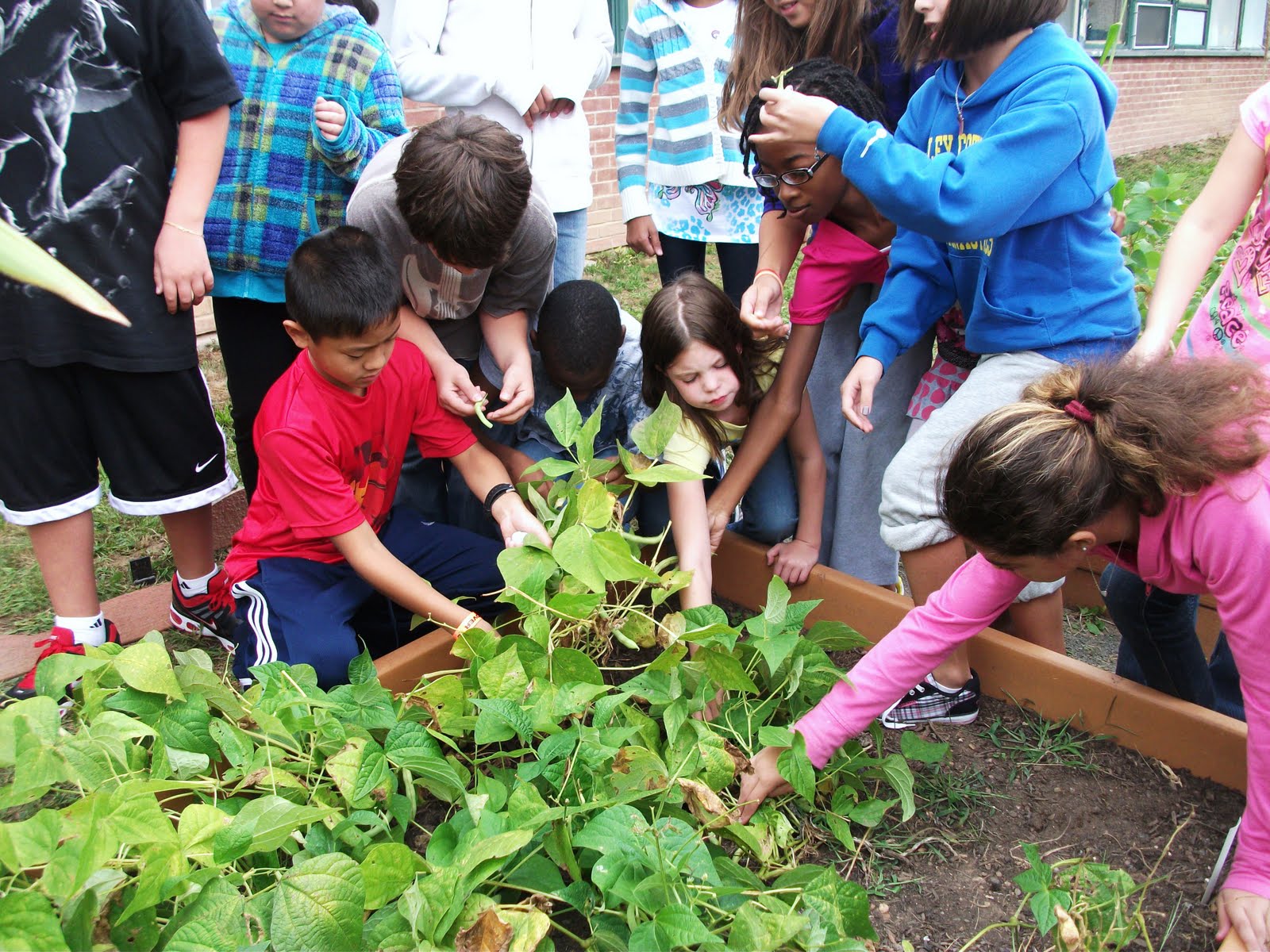
Last week the 4th and 5th graders at Valley Cottage Elementary School harvested the vegetables from the “Three Sisters” garden they planted in June! 

Because our 4th grade Social Studies curriculum covers Native American culture, the planting of this type of garden was a great way for the teachers to do a “hands on” lesson.    


Here is the Three Sisters story:

Modern day agriculturists know it as the genius of the Indians, who inter-planted pole beans and squash with corn, using the strength of the sturdy corn stalks to support the twining beans and the sade of the spreading squash vines to trap moisture for the growing crop.  Resarch has further revealed the additional benefits of this “companion planting.”  The bacterial colonies on the bean roots capture nitrogen from the air, some of which is released into the soil to nourish the high nitrogen needs of the corn.  To Native Americans, however, the meaning of The Three Sisters runs deep into the physical and spiritual well-being of their people.  Known as the “sustainers of life,” the Iroquois consider corn, beans and squash to be specail gifts from the Creator.  The well-being of each crop is believed to be protected by one of the Three Sister Spirits.  Many an Indian legend has been woven around the “Three Sisters”- sisters who would never be apart from one another – sisters who should be planted together, eaten together, and celebrated together.

One of our teachers, Mrs. Signorile, arranged for 6 classrooms came out during their science periods to pick the vegetables.  Another PTA mom and I brought the vegetables home and made succotash (using the green beans we harvested instead of lima beans!)  Unfortunately, our squash vines didn’t make it to September.  We harvested squash in July and August though, before the vine borers got to them.


Succotash
1 ½  cups corn kernals
½ cup chopped onion
1 cup chopped summer squash
1 cup chopped red bell pepper
1 tsp. ground cumin
1 Tbsp olive oil
2 garlic cloves, minced
½  cup of defatted chicken broth
2 Tbsp. chopped cilantro
1/8 tsp hot sauce
1/8 tsp ground pepper
2 cups of baby lima beans (we used chopped green beans!)

Place a large nonstick skillet over high heat until hot.  Add corn, red pepper, onion, and cumin, saute 5 minutes until vegetables are slightly blackened.   Add summer squash, olive oil, and garlic; sauteeing an additional minute.  Reduce heat to medium-high, add broth and remaining ingredients.  Cook 3-5 minutes or until heated through, stirring frequently.   Yield: 8-10 half-cup servings.

The succotash was brought to school in crock pots, and we set up the tasting in the school’s courtyard greenhouse. 

Overheard at the scene:

Ewwww – what IS that? 

Smells like Mexican.

Is this what the Indians ate?

We have a garden at home, too!

Don’t give me any corn.

Give the recipe to the cafeteria!

Don’t give me any beans.


Is this sweet corn?

Who knew vegetables could taste so good?

Can I have seconds?

Our local paper, The Journal News, sent a reporter!  Here's a link to the story with lots of photos!