http://www.flickr.com/photos/nyackbackyard/
Showing posts with label hikes. Show all posts
Saturday, November 19, 2011
The High Line in Autumn
Photos taken at the High Line in Manhattan on November 11, 2011.
Lots more photos on Flickr:
http://www.flickr.com/photos/nyackbackyard/
Monday, October 18, 2010
Fall Foliage Peak Week in Nyack
My friends and family down in Florida get a little jealous of us this time of year. I’m convinced that we live in one of the most beautiful spots in the world during the last two weeks of October and can’t resist showing it off a little. This map at Weather.com shows where fall foliage is peaking in different parts of the world, and it’s looking like this is just about prime time for Nyack and the rest of the Hudson Valley. Here a few spots to scope it out nearby - follow the links for more info:
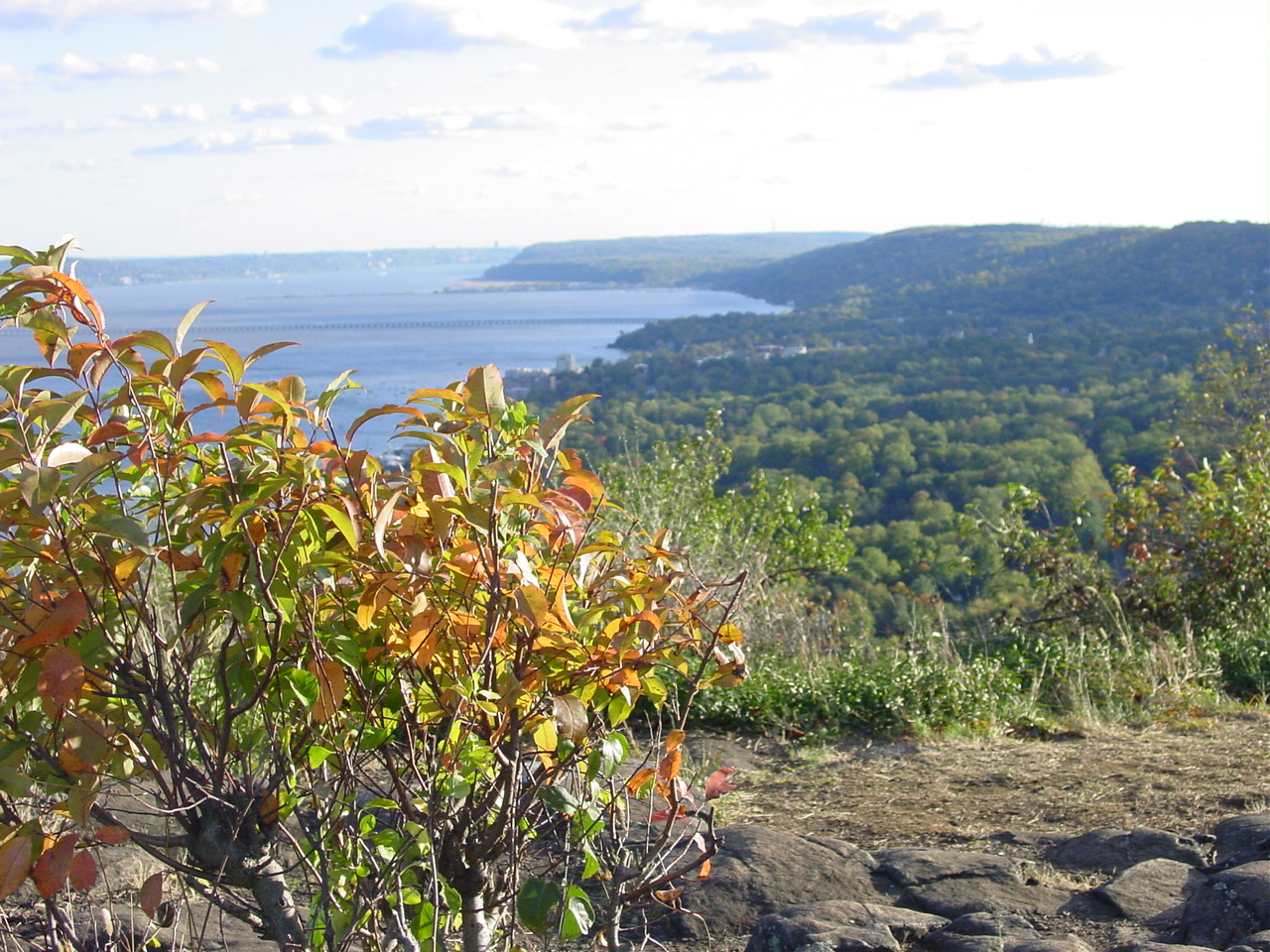
1) Hook Mountain – You can access the trail within Rockland Lake State Park or park along the side of the road on 9W and take a short, steep hike to the top of Hook Mountain for a large-scale view of the river and a good part of the Hudson Valley.
2) Nyack Beach State Park– at the end of North Broadway in Nyack is the entrance to this park, which features a path along the water’s edge.
5) Buttermilk Falls State Park– entrance is on North Greenbush Road, and can also be accessed through the Rockland Center for the Arts’ nature trail.
6) The Esposito Trail – There are lots of places in Nyack to catch this path. I like to park on Brookside, and walk south toward the Thruway – it will take you all the way to Sparkill if you let it.
7) Rockland Lake State Park - Accessed easily by 9W, there is a 3.2 mile paved trail here, as well as trails that connect to Hook Mountain and Nyack Beach.
What about your own backyard? Can I add a photo of your fiery plot or favorite spot? Email it to me at nyackbackyard@gmail.com and I’ll add it to this post, which will be part of Dave’s Fall Color Project at The Home Garden blog.
Previous Fall Color posts
Saturday, September 4, 2010
Mora and More Fun in New Mexico
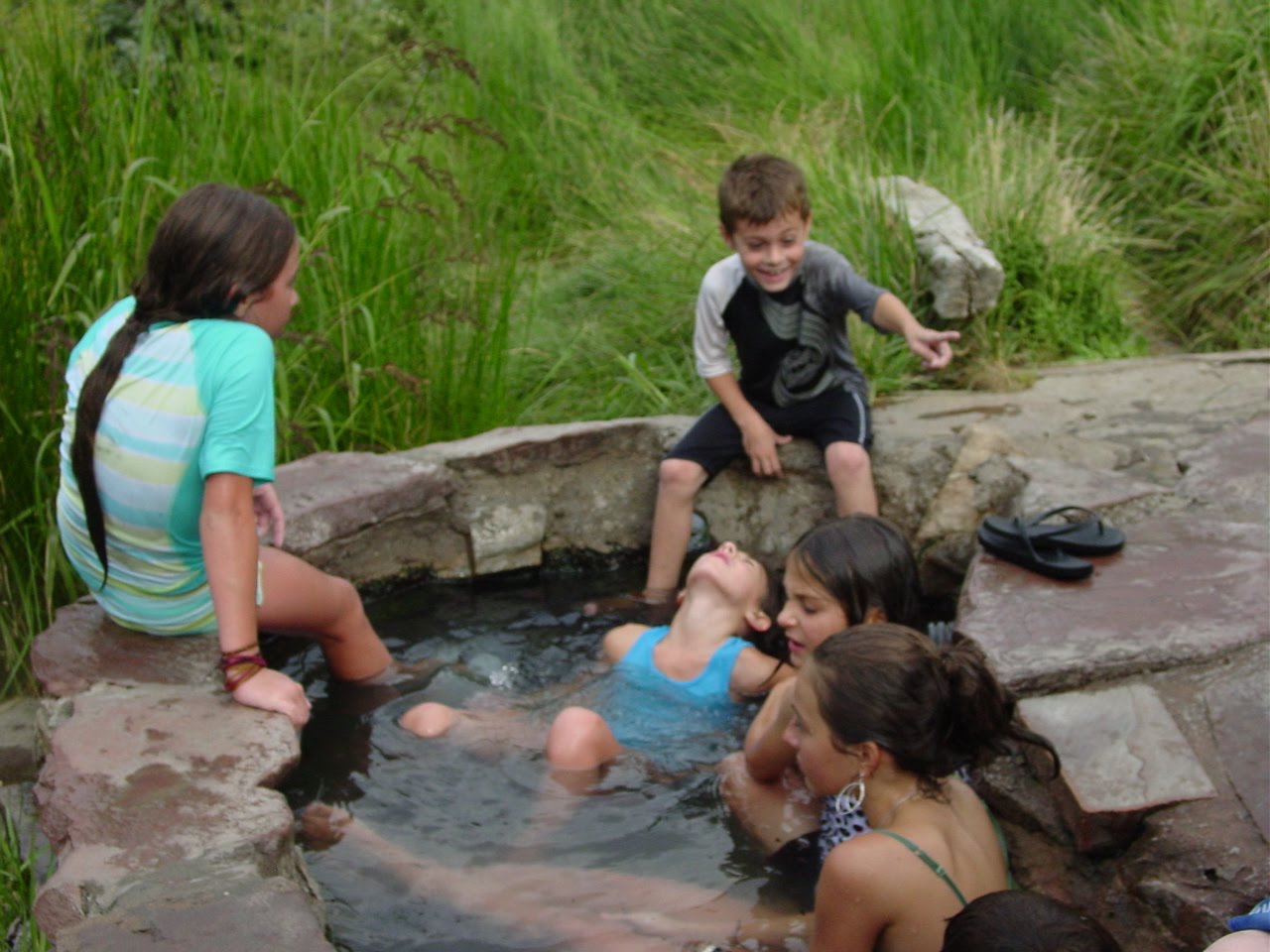
We’d been to the Montezuma Hot Springs before, but this is the first time we went in the cold river, following our dip in the 113-116 degree water. One of the springs is called “The Lobster Pot.” The springs are maintained by the United World College nearby. 
Villanueva State Park was sunny and quiet. The kids call the Pecos River “the chocolate river.” It’s fun to climb out, walk up river a few paces, and ride the current back to home base.
We were improperly clad in flip flops, but also took a short hike over the footbridge and along the path to the canyon.
Despite the many attractions, it's hard to compete with the awesome fun that can be had back at Grandpa’s ranch: fishing, swimming, the trampoline, riding in the back of Lupe's truck, bike rides, huevos rancheros and gorgeous sunsets….
The kids and their cousins with Grandpa..
Other Las Vegas Posts
Ten Things to See in Las Vegas, NM
Grandpa Grows Calabacitas
Rancho de los Golondrinas
Garden Blogger Bloom Day: New Mexican Blooms
Labels:
agriculture,
farms/nurseries,
fruits,
gardening,
hikes,
kid pics fix,
parks,
travel
Sunday, June 13, 2010
Ten Things I Learned from Dr. Susan Petro
If you ever have an opportunity to take a class or go on a "Botanical Walk" at Ramapo College with Dr. Susan Petro, don't even think about refusing. It can't exactly be called a nature walk because it was so much more -- history, literature, entomology, and ecology all had their moment. There was even a culinary component. These are just a few highlights.
Our walk began with the Linden Tree in the parking lot.
1) Linden Trees (Tilia) are insect pollinated, so they can bloom AFTER the leaves appear. Wind pollinated plants bloom before the leaves appear, because the leaves inhibit the flow of pollen. Tea, honey and scented oils are made from linden blossoms. Our guide brought us sample of linden tea (which she served with some yummy homemade lemon madeleines!)
2) When White Clover (Trifolium repens) has been pollinated, the lower petals fold down. That sends a message to pollinators not to bother with this one.
3) MADCAP HORSE is an acronym that helps you remember which trees and shrubs have opposite leaves so that you can identify them.
M = Maple
A = Ash
D = Dogwood
CAP = Caprifoliaceae - viburnums and honeysuckles
HORSE = Horse Chestnut
4) Spruce (picia) v. Fir (abies)- One way to identify conifers is to pull off a needle. If it is a single needle (rather than several in a package) it is most likely a spruce or fir. A spruce needle has 4 sides- "S" is for "Square" and "Spruce." A fir needle is flat. "F" is for "Flat" and "Fir." You'll be able to tell the shape by rolling the needle between two fingers.
5) One legend says that Queen Anne's Lace (daucus carota) is so named because Queen Anne, a champion lacemaker from Denmark, challenged her ladies in waiting to a contest to see who could make the prettiest lace, and Queen Anne, being the queen, won.
Queen Anne, Queen Anne, has washed her lace
(She chose a summer's day)
And hung it in a grassy place
To whiten, if it may.
Queen Anne, Queen Anne, has left it there,
And slept the dewy night;
Then waked, to find the sunshine fair,
And all the meadows white.
Queen Anne, Queen Anne, is dead and gone
(She died a summer's day),
But left her lace to whiten in
Each weed-entangled way!
By Mary Leslie Newton
6) Sassafras- (sassafras albidum) has 3 different leaves: One that looks like a mitten, one with three lobes, and one a simple oval. The root was used to flavor root beer until it was discovered that the distilled oil causes cancer, and it was banned by the FDA.
7) Lichen
"Algae, you're a fungi, I think I've taken a lichen to you...." Lichen are both algae and fungi living together. Lichen are harmless to trees and very sensitive to air pollution.
8) St. John's Wort (Hypericum perforatum) produces an oil that, when consumed by cattle, makes them photosensitive. When the plant overtook some California farmland, the cattle started getting terrible sunburns, and a special beetle had to be introduced to get it under control.
9) Which Maple (acer) is this? Squeeze the tip of the leaf twig. If a white milky extract comes out, it's a Norway Maple. If none, it could be a Red or Sugar Maple. Red Maples have teeth along the edge. Sugar Maples do not. The shape of a Red Maples is like a cat in a ski cap.
10) Milkweed (asclepias) have a little slit on the side that can trap a pollenator and force him to carry hunks of pollen out with her when she leaves.
Well, that's 10, but I love this flower called "butter and eggs" (linaria vulgaris) or toadflax so much! the center has a darker yellow "runway" to alert insects to where the pollen is. This flower is also known as a "baby snapdragon" and yes, they have a little jaw that opens and closes with a gentle pinch. I just had to show you a picture of it.
Dr. Petro's talk stressed the importance of planting native species when given a choice, and the role of native plants in our ecosystem. It will be very hard to walk through the woods, or even my backyard now without recalling these valuable lessons, and feeling grateful to have had this opportunity.
Our walk began with the Linden Tree in the parking lot.
1) Linden Trees (Tilia) are insect pollinated, so they can bloom AFTER the leaves appear. Wind pollinated plants bloom before the leaves appear, because the leaves inhibit the flow of pollen. Tea, honey and scented oils are made from linden blossoms. Our guide brought us sample of linden tea (which she served with some yummy homemade lemon madeleines!)
2) When White Clover (Trifolium repens) has been pollinated, the lower petals fold down. That sends a message to pollinators not to bother with this one.
3) MADCAP HORSE is an acronym that helps you remember which trees and shrubs have opposite leaves so that you can identify them.
M = Maple
A = Ash
D = Dogwood
CAP = Caprifoliaceae - viburnums and honeysuckles
HORSE = Horse Chestnut
4) Spruce (picia) v. Fir (abies)- One way to identify conifers is to pull off a needle. If it is a single needle (rather than several in a package) it is most likely a spruce or fir. A spruce needle has 4 sides- "S" is for "Square" and "Spruce." A fir needle is flat. "F" is for "Flat" and "Fir." You'll be able to tell the shape by rolling the needle between two fingers.
5) One legend says that Queen Anne's Lace (daucus carota) is so named because Queen Anne, a champion lacemaker from Denmark, challenged her ladies in waiting to a contest to see who could make the prettiest lace, and Queen Anne, being the queen, won.
Queen Anne, Queen Anne, has washed her lace
(She chose a summer's day)
And hung it in a grassy place
To whiten, if it may.
Queen Anne, Queen Anne, has left it there,
And slept the dewy night;
Then waked, to find the sunshine fair,
And all the meadows white.
Queen Anne, Queen Anne, is dead and gone
(She died a summer's day),
But left her lace to whiten in
Each weed-entangled way!
By Mary Leslie Newton
6) Sassafras- (sassafras albidum) has 3 different leaves: One that looks like a mitten, one with three lobes, and one a simple oval. The root was used to flavor root beer until it was discovered that the distilled oil causes cancer, and it was banned by the FDA.
7) Lichen
"Algae, you're a fungi, I think I've taken a lichen to you...." Lichen are both algae and fungi living together. Lichen are harmless to trees and very sensitive to air pollution.
8) St. John's Wort (Hypericum perforatum) produces an oil that, when consumed by cattle, makes them photosensitive. When the plant overtook some California farmland, the cattle started getting terrible sunburns, and a special beetle had to be introduced to get it under control.
9) Which Maple (acer) is this? Squeeze the tip of the leaf twig. If a white milky extract comes out, it's a Norway Maple. If none, it could be a Red or Sugar Maple. Red Maples have teeth along the edge. Sugar Maples do not. The shape of a Red Maples is like a cat in a ski cap.
Dr. Petro's talk stressed the importance of planting native species when given a choice, and the role of native plants in our ecosystem. It will be very hard to walk through the woods, or even my backyard now without recalling these valuable lessons, and feeling grateful to have had this opportunity.
Subscribe to:
Posts (Atom)

.jpg)